Around Brandon
Neighborhoods and parks around Brandon
Brandon grew as a collection of neighborhoods around a crossroads. Knowing the layout turns the whole town into one extended backyard.
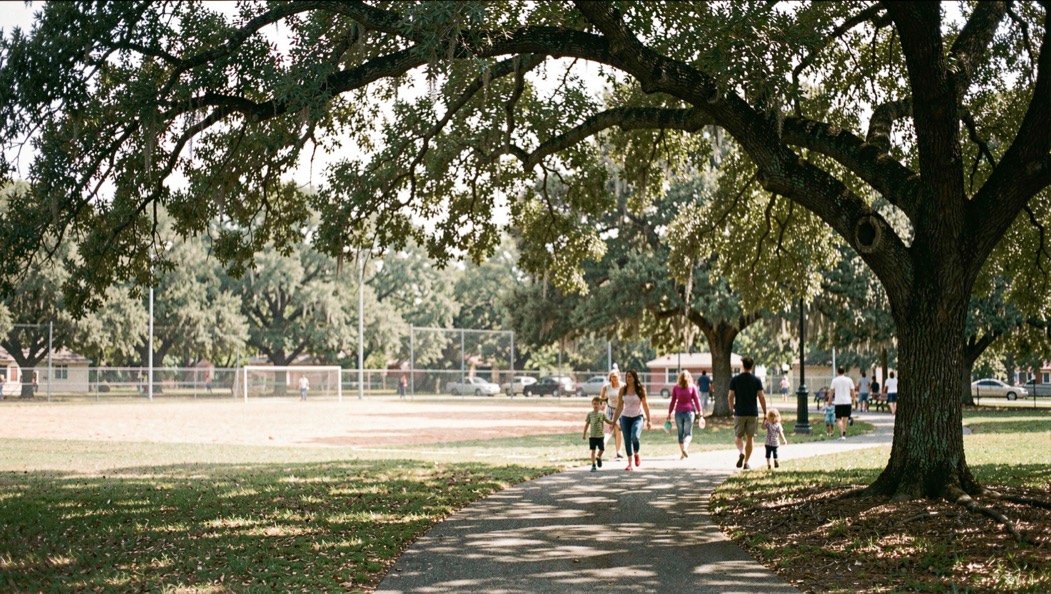
Brandon is not a city with a downtown grid; it grew as rings of neighborhoods around a historic crossroads on State Road 60, accumulating subdivisions, strip centers and parks as the decades rolled east. That shape confuses newcomers, who see sprawl, but it rewards residents, who learn that every pocket of town has its own character and its own useful public space. This tour walks the layout in plain terms: the residential patterns, where the parks concentrate and how to turn that knowledge into a better week.
How the town is laid out
Think of Brandon as corridors rather than districts. State Road 60, Brandon Boulevard on the signs, carries the commercial spine: the shopping, the restaurants, the medical and service businesses that serve the whole area, with the big indoor mall at the western end where the Selmon ends. North and south of it spread the residential rings, from the older subdivisions with mature oak canopy to the newer developments pushing toward the outskirts, where the houses are bigger and the trees are younger. Valrico continues east, Bloomingdale south, Seffner west, and the seams between them are invisible until you learn the parks and schools that mark them. Each ring has its school-and-park pairing, which is the unit that actually matters to families, and the family activities guide builds its weekly routines around exactly those pairings.
The park system, in practical terms
County parks around here follow a recognizable pattern, and learning it unlocks the whole system. The community parks are the big ones: ball fields, courts, playgrounds, pavilions for rent and a walking loop, busy on weekends and programmed all year, with the long-standing recreation center on Sadie Street the oldest example of the species. The neighborhood parks are smaller and quieter: a playground, a patch of shade, sometimes a court, and a parking lot you can always find a spot in. The conservation lands and preserves are the third category: trails, boardwalks and wildlife, with the shade and quiet that make them premium territory from May to September. The boardwalk example in our day trips guide comes from this tier.
Reading a park before you go
- Shade direction: where the canopy falls in the morning tells you when to come.
- Water access: fountains and splash elements decide the summer rating.
- Fencing and sightlines: the difference between relaxing and patrolling, with toddlers.
- Field schedule: a park with games on is a festival; the same park on a Tuesday is a sanctuary.
- Pavilion clusters: a sign of birthday party territory on Saturday mornings.
Neighborhood character, honestly described
| What it tends to offer | Trade-off | |
|---|---|---|
| Older inner rings | Mature trees, character, walkable pockets | Smaller houses, older systems |
| Mid-era subdivisions | Value, space, established schools nearby | Car-dependent for everything |
| Newer outer developments | Bigger homes, modern layouts, community amenities | Young landscaping, longer drives |
| Corridor-adjacent streets | Maximum convenience | Traffic noise to check at rush hour |
The honest advice for anyone choosing a pocket: drive the school run and the grocery run at the hours you will actually make them. A neighborhood tests differently at eight in the morning and on a Sunday, and the park pairing nearby matters more than any finish level inside the house.
Using the parks well
A few habits multiply the value of the whole system. Learn each park's busy hours: community fields fill on weekends and weeknight practice slots, which makes weekday mornings the quiet window everywhere. Reserve pavilions early for birthday season, because the shelter next to the playground is the most contested piece of public furniture in the county. In summer, treat the shaded parks as morning parks and the open ones as winter parks only. And keep a short list of bathrooms you trust; in a town built around children, that list is worth more than any guide.
The corridor-and-pocket logic exists elsewhere too; our guide to Rancho Santa Fe neighborhoods maps a village by trails.
The families with the best weeks here treat the town as one extended backyard: a playground circuit for mornings, a walking loop for the adults, a splash pad for the hot months and a preserve boardwalk for the ones worth driving to. The rotation logic lives in the free things to do guide, and the seasonal logic, which parks reward which months, runs on the seasonal calendar. Learn the layout once, and the town shrinks in the best sense: everything useful ends up fifteen minutes from your door.
Common mistakes to avoid
The layout mistakes cost real weekends. Judging a pocket by its newest model homes instead of its drive times is the first, and the school run at eight in the morning is the honest test. Driving to a community park on a Saturday at ten is the second, when the fields and the parking are spoken for until lunch. Assuming the closest park is the best one is the third, since the shaded loop two exits farther is often the better deal from May to September. And skipping the small neighborhood parks entirely is the quiet one; they are where the empty-swing mornings live.
Learn the rings, the three park species and your own trusted bathrooms, and Brandon stops being sprawl. It becomes what it is to the households that know it: a dozen small towns' worth of parks and porches, arranged so that everything a family needs sits within fifteen easy minutes, and the hardest decision of the week is which loop to walk first.