Around Brandon
The Covenant and its neighbors: local life in Rancho Santa Fe
A 1928 document still governs a California valley: the Covenant, its neighboring enclaves, the bridle trails and the North County seasons.
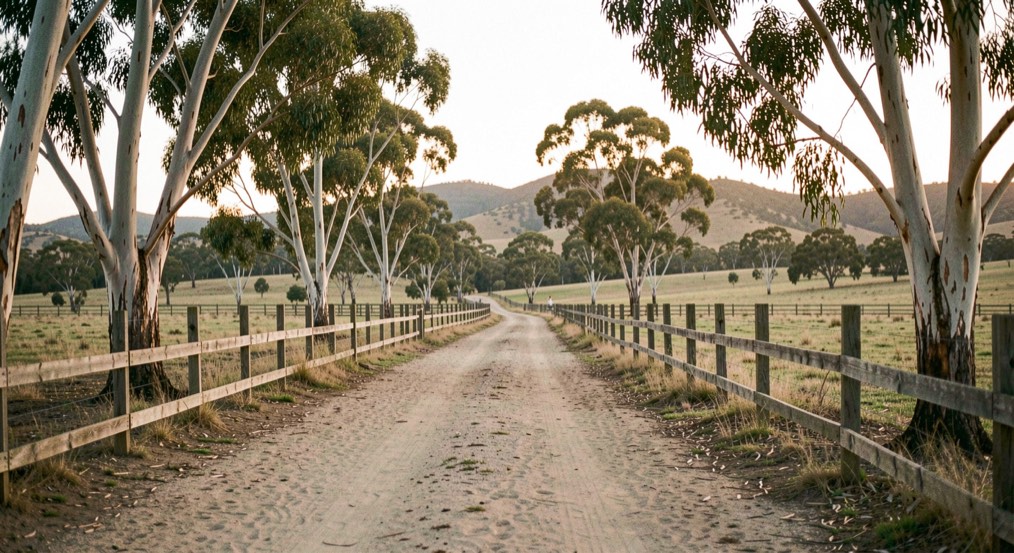
Every established town has a document that made it, whether the residents read it or not. In Rancho Santa Fe, in the hills of northern San Diego County, that document is unusually literal: a protective covenant recorded in 1928 that still shapes what the valley looks like and how its neighborhoods work. For a Brandon reader who knows what a homeowners' association does, the Covenant is the same instrument played at full scale: a whole community's look, lots and roads governed by one recorded promise. This note reads the valley through it: the neighborhoods, the trails, the villages next door and the seasons.
The valley is covered slowly and well by Rancho Santa Fe Living, an independent magazine on the homes, gardens and country life of the area, which publishes the neighborhood field guide this article compresses.
The Covenant: the recorded heart
The Covenant is both a document and a place. The document is the 1928 protective covenant: recorded restrictions covering architecture, land use and lot size across the original planned area, administered to this day by the Rancho Santa Fe Association, which publishes its working material at rsfassociation.org. The place is the neighborhood the document governs: winding roads under mature eucalyptus, the village core designed by Lilian Rice in Spanish Colonial Revival, large lots behind hedges, and a design review process that has kept the valley looking like itself for nearly a century. Newcomers sometimes expect the covenant to be a relic; it functions instead as the valley's constitution.
Fairbanks Ranch and the gated preserves
North of the Covenant proper sit the later answers to the same question. Fairbanks Ranch is the name readers tend to meet first: a gated community of large lots around a private lake and club amenities, the valley's proof that the gated form and the covenant form are cousins. Around it spread the other named enclaves, each a slightly different contract between privacy and landscape: hillside preserves, golf club communities where the lots gather around the course, and the quieter ranch pockets that never needed a gate because the land did the work.
The villages next door and the trail system
The valley does not end at its own edges. The neighboring communities each carry their own character, and the whole area is threaded by something Brandon has no real equivalent of: a bridle trail network on dedicated easements, decades of recorded horse paths that function as the valley's sidewalk system. Riders and walkers use the same sandy corridors between fences and eucalyptus rows, and the trail map is the honest map of how the neighborhoods connect. For a family visiting or settling, the trails are also the daily infrastructure: morning walks, horse access, and the short connections that keep the valley a place rather than a collection of walls.
The village itself deserves a slow morning. Lilian Rice's arcade, the civic center and the garden courtyard make a center that is small on purpose: a place for coffee, mail and conversation rather than retail. The architecture is not decoration here; the Spanish Colonial Revival vocabulary of white plaster, clay tile and deep shade is part of what the Covenant protects, which is why the valley's building traditions read like a continuing argument rather than a preserved photograph.
- The Covenant: the original 1928 area, design review, the Lilian Rice village.
- Fairbanks Ranch: gated, lake-centered, with club amenities.
- Golf communities: lots arranged around private courses.
- The bridle trails: easement paths shared by riders and walkers.
- The neighboring villages: each with its own pace and lot pattern.
The seasons of North County
| Season | What the valley does |
|---|---|
| Winter | Mild days, green hills, the year's rain |
| Spring | Trails at their best, gardens filling in |
| Summer | Dry golden hills, early mornings outdoors |
| Autumn | Warm and quiet, the valley's slow season |
Life in the valley runs on the southern California rhythm: a climate mild enough that the outdoors is a daily room, a summer dry enough that gardens are chosen for it, and a social calendar built around the village, the clubs and the trail system rather than a main street of shops. The seasons here are gentle compared with a Florida year, which makes the outdoor calendar steadier and the planning habits simpler.
Daily logistics follow the same rural grammar. Errands run to the village or out to the neighboring towns, the school and club schedules set the traffic rhythm on the winding roads, and the nearest freeway is close enough to use and far enough to forget. What residents trade for the quiet is time in the car for the ordinary things, and what they get back is a valley where the loudest sound on a Tuesday is a horse on a trail.
The market side of the valley moves at the same pace as the trails. Listings are few, the gaps between them are the point, and the honest way to read prices here is slowly: lot, outlook and which document governs the land matter more than any finish inside the house. That is a market shaped by the Covenant, which is a quieter way of saying the same thing twice.
Common mistakes to avoid
Reading Rancho Santa Fe like an ordinary suburb is the first mistake; the Covenant makes it a governed landscape, and what look like quirks are usually clauses. Assuming the trails are public parkland is the second; they are easements with their own manners. Confusing the mailing address with the Covenant boundary is the third, a distinction the locals keep precise. Judging a lot by its gate is the fourth, since the valley's real currency is land and outlook. And expecting a town center is the fifth: the village is small on purpose, and the trail and the club carry the load a downtown carries elsewhere.
The exercise is worth the reading even from Florida. Our own tour of neighborhoods and parks asks what a neighborhood owes its residents; the Covenant answers the same question with a 1928 document and ninety years of follow-through, which makes it one of the more instructive pieces of local governance a reader of our newcomer's guide can study.